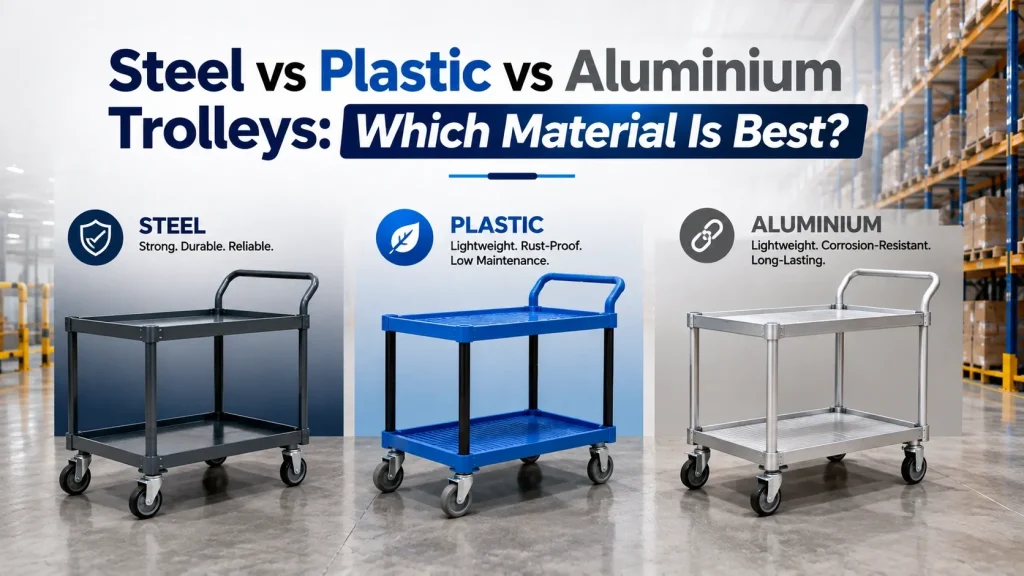
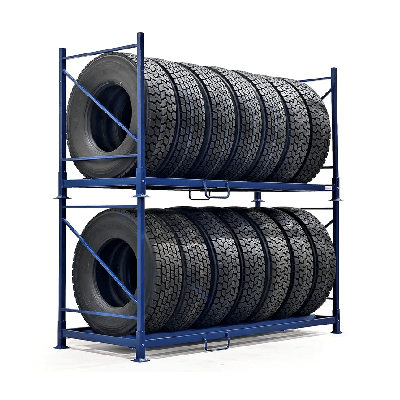
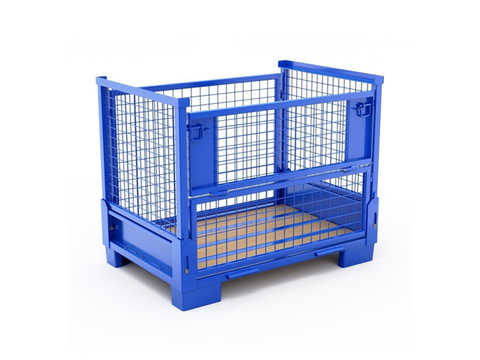
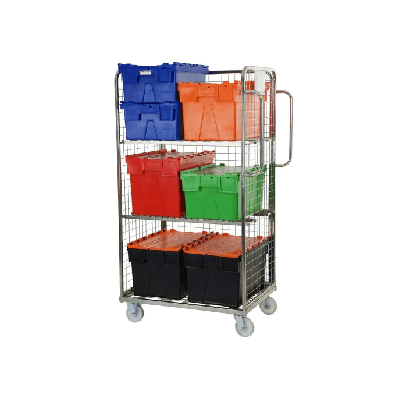
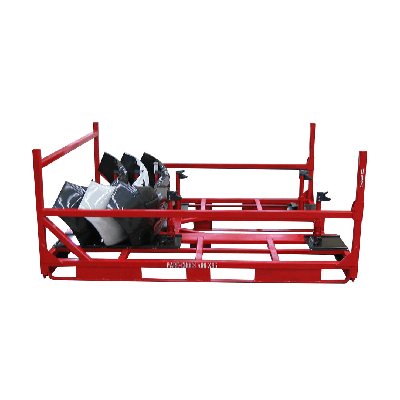
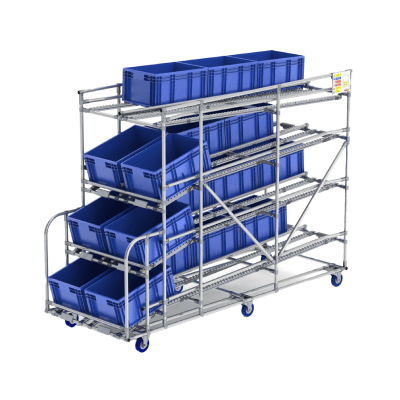
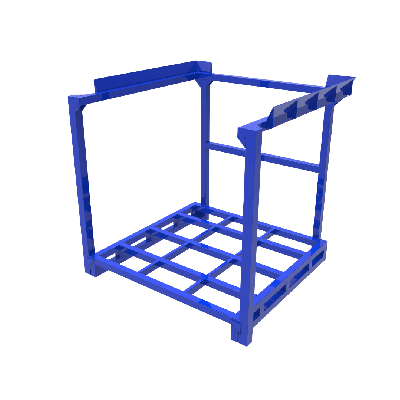
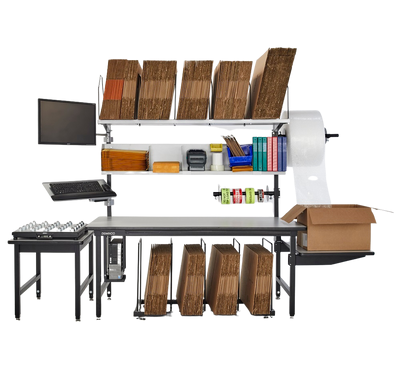
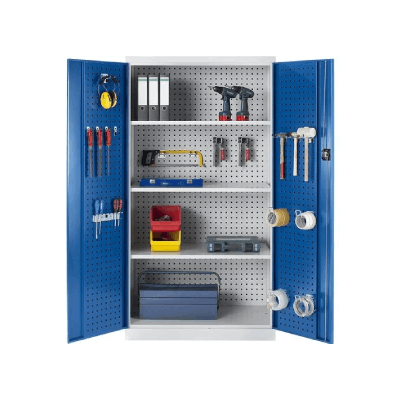






Steel trolleys are best for heavy loads and rough use. Plastic trolleys suit light, clean, and quiet work. Aluminium trolleys fit teams that need a light but strong option. Your best pick depends on your load weight, work environment, and budget.
Table of Contents
ToggleWhat Are Steel, Plastic and Aluminium Trolleys?
A warehouse trolley is a wheeled platform or frame that moves goods by hand. It saves effort, speeds up work, and protects your staff from heavy lifting.
Trolleys come in three main materials.
Steel trolleys are built from mild or stainless steel. Plastic trolleys are molded from tough polymers like polypropylene. Aluminium trolleys use lightweight metal frames, often with a powder coat.
Each material handles weight, moisture, and daily wear differently. That is why one type rarely fits every warehouse.
Benefits and Problems of Each Material
Steel Trolleys
Steel is the strongest option. It handles heavy loads, sharp edges, and rough floors without bending. Many steel trolleys last ten years or more with basic care.
Steel also has drawbacks. It is heavy, so pushing it takes more effort. Mild steel can rust in damp areas unless it has a coating. Stainless steel solves this but costs more.
Plastic Trolleys
Plastic trolleys resist water, chemicals, and rust. They are light, quiet, and easy to wash. This makes them popular in food, pharma, and retail units.
The main limit is strength. Plastic cannot carry very heavy loads. It can also crack under impact and soften in extreme heat.
Aluminium Trolleys
Aluminium gives a useful balance. It is much lighter than steel yet still strong. It does not rust, so it works well in humid or wet areas.
However, aluminium costs more than mild steel. It also bends under extreme loads and is harder to repair after damage.
How to Choose the Right Material
Follow these simple steps before you buy.
First, check your load weight. List the heaviest item you will carry. Choose a trolley rated above that figure.
Next, review your environment. Wet floors, cold rooms, and food areas need rust-proof materials. Dry, heavy-duty areas suit steel.
Then, think about handling. If workers push the trolley all day, a lighter material reduces fatigue.
After that, check your floor type. Rough floors need strong frames and larger wheels. Smooth floors allow lighter designs.
Finally, compare suppliers. A trusted warehouse trolley manufacturer will share load test data, material grades, and wheel options. Ask for a sample before ordering in bulk.
Quick Comparison
| Feature | Steel | Plastic | Aluminium |
|---|---|---|---|
| Strength | Very high | Low to medium | Medium to high |
| Weight | Heavy | Light | Light |
| Rust resistance | Low (mild steel) | Excellent | Excellent |
| Ease of cleaning | Moderate | Excellent | Good |
| Lifespan | 10 years or more | 3 to 7 years | 8 to 12 years |
| Best for | Heavy industry | Hygiene and light loads | Mixed, mobile use |
Cost Details
Prices change with size, capacity, and build quality. The figures below are rough estimates for a standard platform trolley in India.
| Trolley Type | Approximate Price per Piece |
|---|---|
| Plastic | Rs 2,500 to Rs 8,000 |
| Mild steel | Rs 4,000 to Rs 15,000 |
| Stainless steel | Rs 10,000 to Rs 35,000 |
| Aluminium | Rs 8,000 to Rs 30,000 |
Plastic costs the least upfront, but it may need earlier replacement. Steel offers the lowest cost per year for heavy use. Aluminium costs more at first, yet it saves effort and avoids rust repairs.
Remember the smaller costs too. Wheels, brakes, repairs, and coatings all add to the budget. When you request a quote from a warehouse trolley manufacturer, ask for these items in writing. Bulk orders usually bring better rates.
Many buyers also look at Advanced Trolley Systems that combine strong frames with quality castors for smoother handling and longer life.
Who Is Each Material Best For?
Steel trolleys suit factories, workshops, and heavy storage areas. Think machine parts, metal sheets, and bulk goods.
Plastic trolleys suit food units, pharma, retail, and cold rooms. They work best for light, clean, and frequent use.
Aluminium trolleys suit e-commerce hubs, airports, and mixed-use warehouses. They help where staff move trolleys over long distances.
Many companies use a mix. They use steel for heavy zones and plastic or aluminium for lighter, cleaner ones. A good warehouse trolley manufacturer can help you plan that split.
FAQs
Which trolley material is the strongest?
Steel is the strongest and handles the heaviest loads.
Which trolley is lightest?
Plastic is usually the lightest, followed closely by aluminium.
Do aluminium trolleys rust?
No. Aluminium resists rust, though it can show surface wear.
Which trolley is best for food storage?
Plastic or stainless steel, because both are easy to clean and hygienic.
Which trolley is cheapest?
Plastic trolleys usually cost the least upfront.
How long does a steel trolley last?
A well-maintained steel trolley can last ten years or more.
Conclusion
No single material wins every time. Steel wins on strength. Plastic wins on hygiene and weight. Aluminium wins on balance. Match the material to your load, your floor, and your budget, and your trolleys will last longer.
Ready to upgrade your warehouse handling? Share your load weight, size, and quantity, and get a custom recommendation that fits your work.
Contact us today to get durable trolleys and expert guidance for your business.