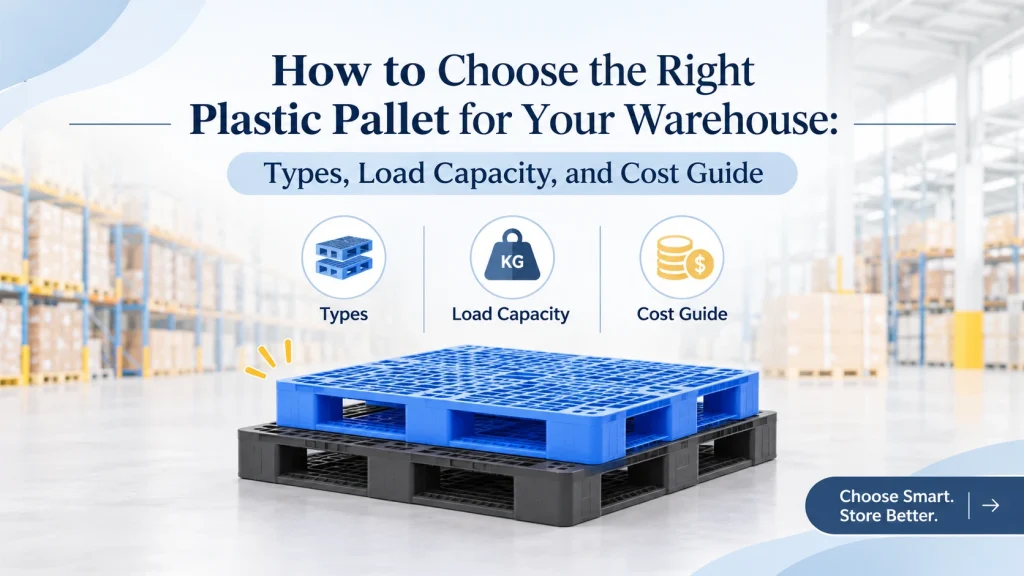







To choose the right plastic pallet, match its type, load capacity, and size to your goods and your storage system. Then compare the price against its lifespan, not just the upfront cost. To help you choose with confidence, this guide breaks down each stage into easy-to-understand terminology.
Table of Contents
ToggleWhat Is a Plastic Pallet and How Do You Choose One?
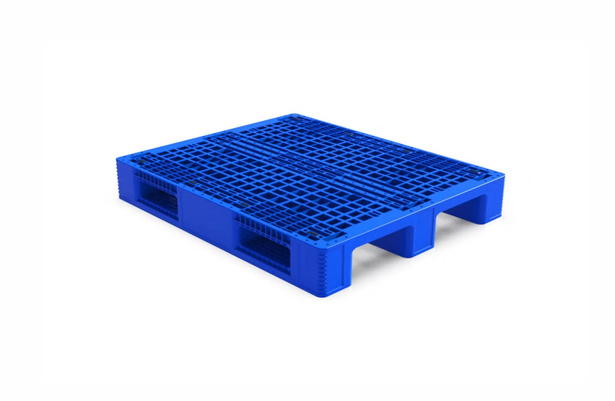
A plastic pallet is a reusable platform made from plastic, usually HDPE or PP. Warehouses use it to store, stack, and move goods with forklifts and pallet jacks.
Choosing the right one means checking four things:
- The weight your pallet must carry
- How you store it (floor, stacked, or racked)
- The pallet size and design
- The total cost over its lifetime
Main Types of Plastic Pallets
Each type suits a different job. Here is a quick view.
Rackable pallets – These have steel reinforcement or a strong frame. They stay stable on racking beams and carry heavy loads without bending.
Stackable pallets – They have corner posts or feet that lock into the pallet below. They suit floor stacking and save space.
Nestable pallets – These fit inside each other when empty. They cut return freight and storage space.
Export pallets. They are light and low-cost. Exporters use them for one-way shipments, and they avoid the fumigation rules that apply to wood.
Hygienic pallets – These have a closed or smooth deck that is easy to wash. Food, dairy, and pharma units prefer them.
Understanding Load Capacity
Load capacity is the most important factor. Pallets carry weight in three ways.
Dynamic load – This is the weight the pallet carries while a forklift moves it.
Static load – This is the weight it carries while resting on a flat floor.
Racking load – This is the weight it carries while sitting on rack beams. It is always the lowest of the three, because the pallet is supported only at its edges.
As a rough guide, many standard pallets carry around 1,000 to 1,500 kg dynamically. Static ratings are often much higher. Racking ratings are usually lower than both. Exact numbers vary by design, so always check the manufacturer’s data sheet.
A simple rule helps here. Choose a pallet whose rated capacity is higher than your heaviest load. This gives you a safety margin.
Benefits of Choosing the Right Pallet
A well-matched pallet solves many daily problems.
- Longer life. Plastic resists moisture, rust, and pests. It does not rot like wood.
- Safer handling. There are no nails or splinters. This lowers injury risk.
- Less product damage. A strong, even deck protects your goods.
- Cleaner storage. Plastic is easy to wash, which helps food and pharma teams.
- Automation ready. Uniform size and weight work well with conveyors and ASRS lines.
- Lower long-term cost. Reusable pallets reduce repair and replacement spending.
Problems a Wrong Choice Can Cause
A poor match creates real trouble. A weak pallet can sag on racks and risk a collapse. An oversized pallet wastes floor space. An overbuilt one raises your budget without any gain. These mistakes are easy to avoid with proper planning.
Step-by-Step Process to Choose the Right Pallet
Follow these steps in order.
- Weigh your heaviest load. Include the product and its packaging.
- Check how you store it. Decide between floor, stacked, or racked storage.
- Measure your space. Note rack openings, aisle widths, and container sizes.
- Pick a deck style. Choose open for airflow and lighter weight. Choose closed for small items and easy cleaning.
- Review your environment. Cold storage, wash-down areas, and hot zones need suitable plastic grades.
- Ask about customization. Special sizes, anti-slip features, or logos may help your process.
- Compare suppliers. Work with reliable Plastic Pallet Manufacturers in India who can share test data and offer after-sales support.
If you are unsure, match the pallet to Your Storage Needs before you compare prices.
Cost Details: What Does a Plastic Pallet Cost in India?
Prices vary widely. The figures below are indicative only and change with market rates.
| Light-duty and export pallets | Rs. 800 to Rs. 1,500 |
| Standard stackable pallets | Rs. 1,500 to Rs. 3,500 |
| Heavy-duty rackable pallets | Rs. 3,500 to Rs. 8,000 and above |
What Affects the Price
- Raw material. Virgin plastic costs more than recycled plastic but performs better.
- Weight and size. Heavier, larger pallets use more material.
- Reinforcement. Steel inserts add strength and cost.
- Order quantity. Bulk orders often get better rates.
- Customization. Special molds or colors raise the price.
Think in Total Cost
A cheap pallet that breaks in a year costs more than a strong one that lasts for many years. Divide the price by the number of years or trips it will serve. This shows the true cost. Experienced Plastic Pallets Manufacturers in India can help you compare options on this basis.
Who Is It Best For?
Plastic pallets work well for:
- Food and beverage plants
- Pharmaceutical and healthcare units
- Warehouses and distribution centers
- E-commerce and retail fulfillment hubs
- Automobile and electronics manufacturers
- Exporters who want light, pest-free pallets
If your operation needs hygiene, repeat use, or automation, plastic is usually a smart choice.
FAQs
1. Which plastic pallet is best for racking?
A rackable pallet with steel reinforcement is best. It stays rigid on rack beams under heavy loads.
2. How much weight can a plastic pallet carry?
It depends on the design. Many carry about 1,000 to 1,500 kg while moving. Static capacity is usually
higher, and racking capacity is lower.
3. Are plastic pallets better than wooden pallets?
Plastic pallets last longer, stay cleaner, and resist pests and moisture. They also reduce injury risk.
4. What distinguishes dynamic load from static load?
Dynamic load is the weight carried during movement. Static load is the weight carried while the pallet rests on the floor.
5. Can plastic pallets be customized?
Yes. You can request custom sizes, load ratings, colors, and added features based on your goods.
6. How long do plastic pallets last?
With proper use, they often last several years. Lifespan depends on load, handling, and plastic quality.
Conclusion
The right plastic pallet depends on your load, storage method, and budget. Check the capacity, pick the correct type, and judge the cost over the pallet’s full life. A careful choice saves money, protects your goods, and keeps your warehouse running smoothly.
Kole Global brings 35 years of experience in material storage and packaging. Our staff will assist you in choosing or creating a pallet that works for your business. Share your load weight, size, and quantity, and we will suggest the best option. Contact us today for expert guidance and a quick quote.