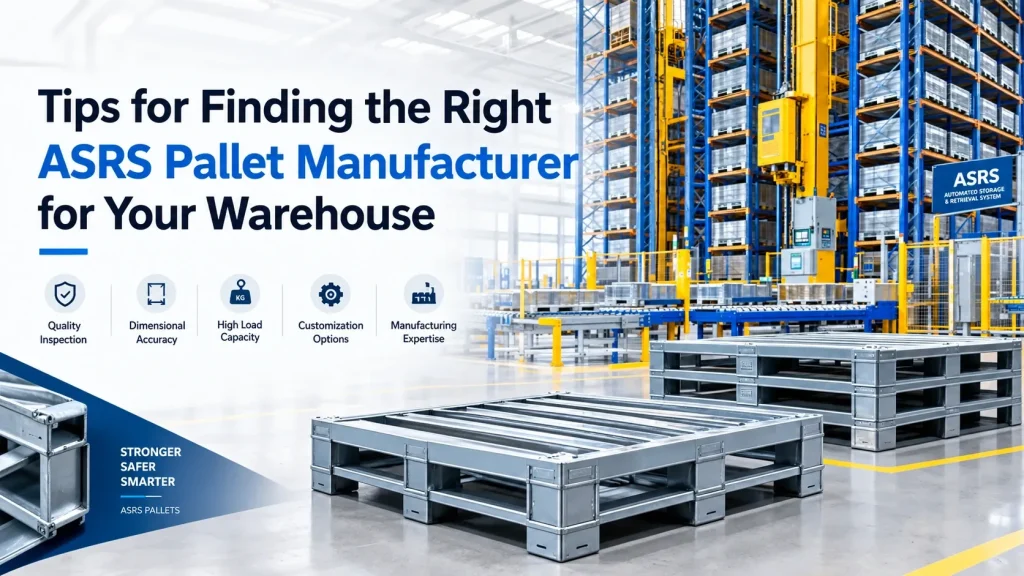









Warehousing in India has undergone a significant transformation over the last decade. With the rise of e-commerce, pharmaceutical distribution, automotive supply chains, and cold storage logistics, businesses are under constant pressure to store more goods in less space while maintaining faster retrieval times. This is where Automated Storage and Retrieval Systems, commonly known as ASRS, have become indispensable. And at the core of every ASRS installation lies one critical component that often goes unnoticed until something goes wrong: the pallet.
Choosing the right ASRS pallet manufacturer in India is not a minor procurement decision. It directly affects system uptime, load safety, and the long-term return on investment of the entire automated warehouse setup.
Table of Contents
ToggleWhat Are ASRS Pallets and Why Are They Different
Standard wooden pallets work fine in conventional warehouses where forklifts and manual labor handle the movement. But ASRS environments operate differently. Here, stacker cranes, shuttle systems, and conveyor lines interact with pallets in very precise ways. The tolerances are tight, the speeds are controlled, and any deviation in pallet size, flatness, or structural integrity can cause a system jam or, worse, a load drop at height.
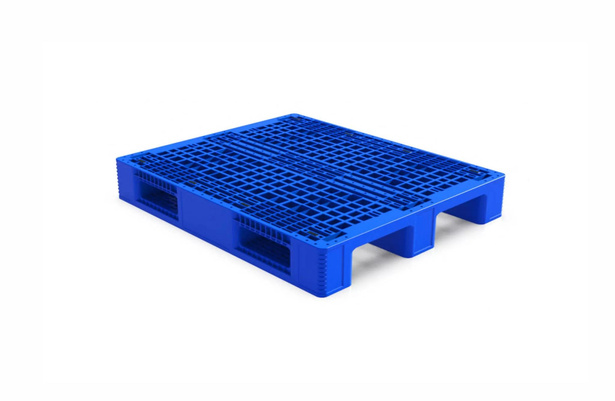
ASRS pallets, particularly heavy duty variants, are engineered to specific dimensional standards. They need to maintain consistent fork entry points, uniform surface contact with conveyor rollers, and the ability to bear dynamic loads during acceleration and deceleration inside the racking system. This is a fundamentally different requirement compared to a pallet that simply sits on a rack and waits to be picked by a human operator.
In India, the demand for ASRS-compatible heavy duty pallets has grown steadily as more warehouses and distribution centers adopt automated systems from suppliers like Daifuku, SSI Schaefer, Mecalux, and local integrators. This growth has also pushed Indian manufacturers to upgrade their production capabilities to meet international specifications.
Materials Used in Heavy Duty ASRS Pallets
Indian manufacturers primarily produce ASRS pallets in three materials: high-density polyethylene (HDPE), polypropylene, and steel.
HDPE pallets are the most common choice for ASRS environments. They offer good dimensional stability, resistance to moisture and chemicals, and a consistent weight that automated systems can account for during load calculations. HDPE pallets can typically handle static loads of 5,000 kg to 8,000 kg and dynamic loads of 1,500 kg to 2,000 kg depending on the design.
Polypropylene pallets are lighter and suitable for lighter load applications within ASRS systems. They are often chosen for pharmaceutical and food-grade warehouses where hygiene standards are strict and the goods themselves are not excessively heavy.
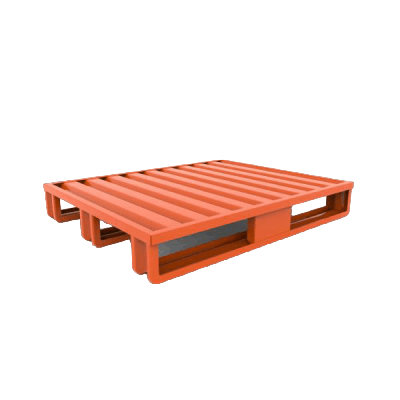
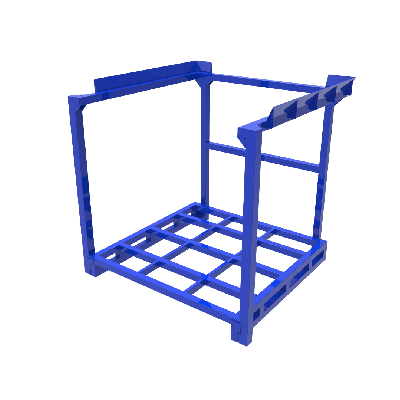
Steel pallets are used in the most demanding industrial applications, particularly in automotive component storage, heavy engineering, and multi-shift cold chain operations. Steel ASRS pallets manufactured in India are typically built from mild steel or stainless steel with a powder-coated or galvanized finish. They handle loads far beyond what plastic can manage and offer a longer service life in rough industrial conditions.
Key Specifications That Matter in ASRS Pallet Manufacturing
When evaluating an ASRS pallet manufacturer in India, the technical specifications matter more than the price per unit. Here are the factors that should be reviewed carefully.
Dimensional Accuracy: ASRS systems are programmed around exact pallet dimensions. A variance of even a few millimeters in length, width, or deck height can cause conveyor misalignment or stacker crane errors. Reputable manufacturers maintain tight tolerances, usually within plus or minus 2 mm.
Load Bearing Capacity: The pallet must clearly specify both static load capacity (when stored on a rack) and dynamic load capacity (when being transported by the system). These are not the same figure, and confusing them is a common mistake that leads to pallet failure under automated handling.
Deck Flatness: Flatness is critical for roller conveyors. A warped or uneven deck surface causes the pallet to rock, which throws off sensors and can halt automated operations.
Fork Entry Design: The fork openings must align precisely with the stacker crane forks or shuttle arms. Manufacturers design these according to the specific ASRS equipment being used, so the pallet design is often system-specific rather than universal.
Surface Texture: Anti-slip surfaces are important to prevent load shift during high-speed transfers within the system.
The State of ASRS Pallet Manufacturing in India
India has developed a capable base of pallet manufacturers over the years, concentrated primarily in industrial hubs like Pune, Ahmedabad, Chennai, Delhi NCR, and Bengaluru. Several of these manufacturers have invested in injection molding machines capable of producing large-format plastic pallets, while others have set up fabrication units for steel pallet production.
What distinguishes a serious ASRS pallet manufacturer from a general pallet supplier is the engineering consultation offered before production begins. Since ASRS pallets are not off-the-shelf products in most cases, the manufacturer needs to understand the racking height, load weight, product type, conveyor specifications, and system integrator requirements before finalizing the design.
Indian manufacturers have also started aligning with international quality standards. ISO certification and compliance with European pallet standards have become more common, especially among manufacturers who supply to multinational companies setting up warehouses in India or exporting pallets to overseas clients.
Industries Driving Demand for Heavy Duty ASRS Pallets in India
The pharmaceutical sector is one of the largest consumers of ASRS-compatible pallets in India. Cold storage for vaccines, regulated storage for active pharmaceutical ingredients, and the need for audit-trail compliance have made automated warehousing a standard practice for large pharma companies.
The automotive industry is another major driver. Component storage for assembly lines, particularly in facilities following just-in-time inventory models, relies heavily on ASRS for speed and accuracy. Heavy duty steel pallets are commonly used here given the weight of engine parts, transmissions, and body panels.
E-commerce fulfillment centers, FMCG distribution hubs, and retail warehouse chains are increasingly adopting mini-load ASRS systems, which require smaller but precisely engineered pallets for tote and carton-based storage.
What to Evaluate When Selecting a Manufacturer
Beyond specifications, there are practical considerations when selecting an ASRS pallet manufacturer in India.
The manufacturer should have experience working with system integrators and should understand the language of ASRS engineering. A supplier who only understands general warehousing is unlikely to grasp the importance of conveyor compatibility or sensor-trigger surfaces.
Production capacity and lead time matter in large projects. ASRS installations typically require hundreds or thousands of pallets delivered in coordinated batches. The manufacturer must demonstrate the ability to meet volume requirements without sacrificing dimensional consistency.
After-sales support is also relevant. Pallets in ASRS systems wear over time, particularly at fork entry points and conveyor contact surfaces. A manufacturer who offers replacement parts, refurbishment services, or warranty support reduces long-term operational risk.
Final Thoughts
The pallet is not a commodity in an ASRS environment. It is an engineered component with performance requirements that are just as demanding as any other part of the automated system. As India continues to invest in warehouse automation across sectors, the role of specialized ASRS pallet manufacturers becomes increasingly important.
Understanding what goes into a well-made heavy duty ASRS pallet, and knowing how to evaluate the manufacturers producing them, is essential knowledge for any logistics manager, warehouse designer, or procurement professional involved in automation projects in India.