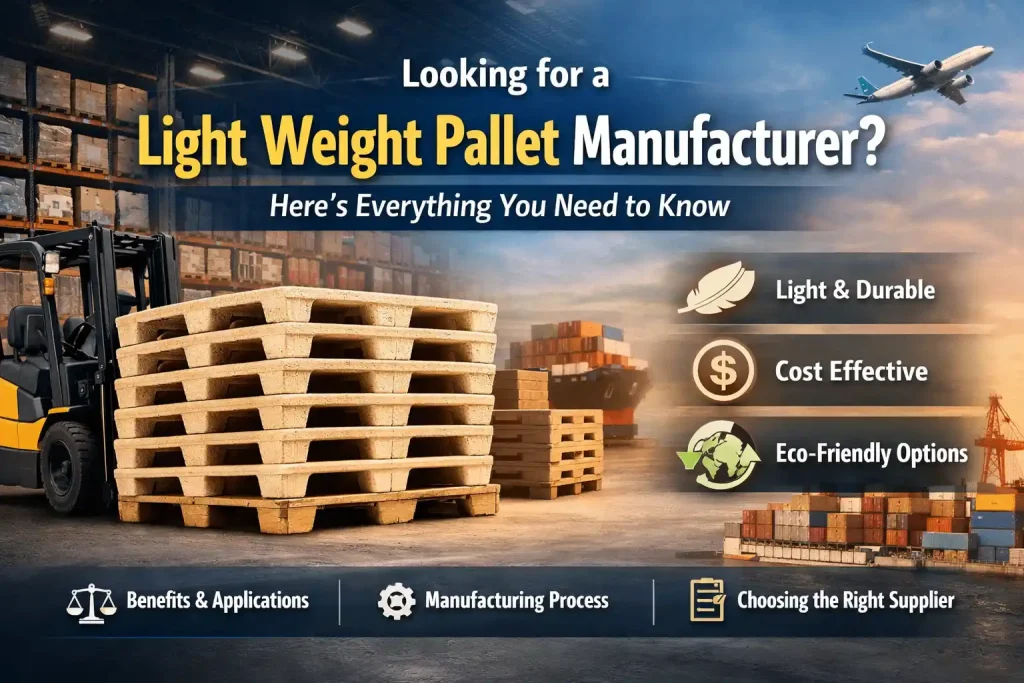










If you manage a warehouse or oversee supply chain operations, you already know that the wrong pallet choice can ripple through your entire process — slowing down forklifts, raising injury risks, and silently inflating costs over time. Choosing the right light weight pallet manufacturer is one of those decisions that looks simple on the surface but carries serious long-term consequences.
Unlike traditional hardwood pallets, lightweight alternatives offer real advantages in material handling efficiency: easier manual loading, lower freight costs, and better hygiene control in food-grade or pharmaceutical environments. But not every manufacturer meets the same bar. Quality can vary widely, and what looks like a bargain on a per-unit quote can turn into a costly mistake after a few months of heavy use.
So how do you cut through the noise and find a supplier you can actually trust? This guide breaks down the key evaluation criteria — from raw material standards to after-sales support — so you can make a confident, well-informed decision. Whether you’re sourcing warehouse equipment for a distribution center or looking to replace aging infrastructure, these benchmarks will help you separate serious manufacturers from those just chasing orders.
Table of Contents
Toggle1. Quality and Durability Standards
Quality is the single most important factor when evaluating any lightweight pallet manufacturer — and it’s also the easiest to misrepresent in a sales pitch. Genuine quality shows up in third-party test data, not glossy brochures.
What to look for in testing and certification
Start by asking about load-bearing test results. A reputable manufacturer will have independent lab data showing static load capacity (the weight a pallet holds at rest) and dynamic load capacity (what it sustains during movement). For material handling operations involving forklifts or pallet trucks, dynamic capacity matters most.
Look for compliance with ISO 8611 (the international standard for pallet performance testing) or equivalent national standards. If a manufacturer can’t provide traceable test documentation, that’s a red flag worth taking seriously.
Durability also ties directly to raw material grade. Pallets manufactured with recycled plastics of inconsistent composition will behave unpredictably under thermal stress or heavy cycling. Ask whether the company uses virgin-grade polymer, post-industrial recycled material, or a defined blend — and request the material data sheets. This level of transparency is a reliable signal of how seriously a manufacturer takes quality control across their entire production process.
2. Customization Capabilities
Standard pallet dimensions work well for general warehouse equipment setups — but your operation may not be standard. The ability to customize is a genuine differentiator between a manufacturing partner and a commodity vendor.
Dimensions, load ratings, and surface design
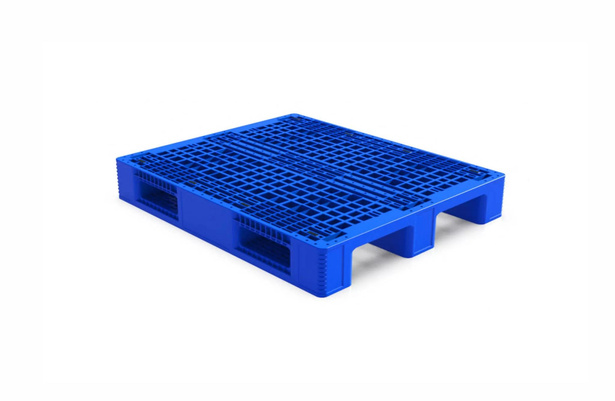
A capable light weight pallet manufacturer should be able to accommodate non-standard footprints, adjust entry configurations (two-way vs. four-way), modify deck surface patterns for anti-slip properties, and integrate features like RFID slots or barcoded labels for inventory tracking.
Consider a food distribution business that needs pallets sized precisely to fit refrigerated truck bays with a specific span between decks to allow cold-air circulation. Off-the-shelf products rarely solve this kind of problem. A manufacturer with its own tools and assistance from engineers can.
When evaluating customization capabilities, ask for examples of past non-standard projects and the typical lead time for custom tooling. Also clarify minimum order quantities for bespoke designs — some manufacturers require high MOQs that only make sense at enterprise scale. If your volumes are moderate, look for a supplier who offers flexible pilot runs before full production commitments.
3. Cost-Effectiveness Over Time
Unit price is one data point. Total cost of ownership is the number that actually matters. This is where a seemingly expensive pallet from a quality manufacturer can end up being significantly cheaper than a budget alternative over a three-to-five-year horizon.
Calculating real value beyond the purchase price
Think through all the cost variables: How many cycles does the pallet survive before requiring replacement? What is the breakage rate under normal warehouse operations? Does the lightweight design meaningfully reduce freight costs per shipment? Are there labor savings from easier handling by staff?
For businesses running industrial trolleys or automated conveyor systems, pallet consistency is critical. Warped, cracked, or dimensionally inconsistent pallets cause jam-ups and equipment wear that translate directly into maintenance costs and downtime.
A straightforward way to test this is to request a trial batch and track performance metrics over 60 to 90 days. Compare breakage rates, cycle counts, and any incidents involving material handling equipment against your current supplier’s data. The numbers will tell the story more clearly than any sales presentation. Factor in shipping economics too — because lightweight designs can meaningfully reduce per-load freight costs across high-frequency distribution routes.
4. After-Sales Support and Warranty
Even the best products occasionally fail. What separates a reliable supplier from an unreliable one is what happens next. After-sales support is often an afterthought during procurement evaluations — and then it becomes the most important thing the moment something goes wrong.
Warranty terms and responsive support channels
A quality-focused manufacturer will offer a clearly written warranty covering manufacturing defects, with defined terms around load conditions and acceptable use environments. Read the warranty carefully: watch for exclusions that create room to deny legitimate claims.
Beyond warranty paperwork, evaluate responsiveness. How quickly does the team respond to technical questions before the sale? That behavior rarely improves after you’ve already placed an order. Ask for references from existing customers and specifically ask about their experience when problems arose.
Also worth assessing: does the manufacturer offer spare parts, repair kits, or replacement deck boards for modular designs? For high-volume operations running thousands of pallets, a repair-and-reuse program can meaningfully extend asset life and reduce replacement frequency. The best trolley supplier relationships work the same way — support infrastructure is as important as the product itself, and it reflects how seriously the company views long-term partnerships versus one-time transactions.
5. Industry Expertise and Compliance
Not all pallets are suitable for all industries. A manufacturer with deep industry expertise understands the regulatory landscape of your sector — and builds products that comply without requiring you to navigate the complexity yourself.
Sector-specific compliance requirements
In food and beverage logistics, pallets must meet hygiene standards that prevent contamination. This typically means closed-deck designs, FDA-compliant materials, and easy-clean surfaces. In pharmaceutical distribution, chain-of-custody documentation and cleanroom compatibility can be required.
Export operations add another layer: pallets crossing international borders may need to comply with ISPM-15 regulations, which govern pest control treatment for wood products. Plastic and lightweight composite pallets are typically exempt — a genuine operational advantage worth highlighting to procurement teams still defaulting to wooden alternatives out of habit.
Ask manufacturers directly about the verticals they serve and request case studies or references from companies operating in your space. A manufacturer who has already solved the compliance challenges specific to your industry will require far less hand-holding than one learning on the job with your account. Industry expertise also signals stability — companies that serve regulated industries tend to maintain higher internal standards across all of their production.
6. Innovation and Technology Integration
The pallet industry has not stood still. Forward-looking manufacturers are integrating technology directly into their products — and those investments can deliver measurable operational value for businesses running modern warehouse equipment and supply chain systems.
Smart features and manufacturing process innovation
At the product level, look for manufacturers offering embedded RFID tags, QR code panels, or NFC-enabled variants that integrate with warehouse management systems. Real-time pallet tracking reduces inventory shrinkage, speeds up cycle counts, and supports automated dispatch workflows — all without requiring manual scanning intervention.
At the production level, ask how the manufacturer quality-controls its output. Are they using automated dimensional inspection systems? Do they run statistical process control on material inputs? Manufacturers investing in production technology typically deliver more consistent products with fewer defects.
Innovation also shows up in material science. Some manufacturers are developing hybrid composites that achieve the weight benefits of plastic with improved rigidity and impact resistance at cold temperatures — a meaningful advance for frozen food logistics or outdoor storage environments. Asking a manufacturer what they’ve introduced in the past two years is a quick way to gauge whether they’re investing in their product roadmap or simply running a mature product with no real development investment. The best lightweight pallet manufacturer relationships grow with your business, not just alongside it.
Making the Right Choice for Your Operations
Evaluating a light-weight pallet manufacturer properly takes more effort than comparing price sheets — but it’s effort that pays back quickly. Quality and durability standards, customization flexibility, total cost of ownership, reliable after-sales support, industry compliance, and a genuine commitment to innovation: these are the six pillars that separate dependable long-term partners from suppliers who look good until the first problem surfaces.
The right manufacturer will be transparent about test data, honest about lead times, responsive before and after the sale, and genuinely knowledgeable about the regulatory and operational realities of your industry. When you find a supplier who checks all of those boxes, the relationship tends to deliver compounding value — better pricing at scale, faster problem resolution, and a product that genuinely improves over time.
If you’re actively sourcing a supplier that meets these standards, Kole Global is worth exploring. As a trusted name in the material handling space, they bring the combination of engineering depth, compliance knowledge, and customer support that high-volume operations require. Visit their website or get in touch with their team to discuss your specific requirements — and use the evaluation criteria in this guide to make sure the conversation covers everything that actually matters.
Frequently Asked Questions:-
1) What certifications should I request from a lightweight pallet manufacturer before ordering?
- Ask for ISO 8611 test results showing static and dynamic load capacity, plus material data sheets for the polymers used. If you’re in food or pharma, confirm FDA compliance or cleanroom-safe certifications. No documentation = higher risk, regardless of price.
2) How do I calculate the true cost of lightweight pallets vs. wooden ones?
- Look beyond unit price. Factor in cycle life, breakage rate, freight savings from reduced weight, and labor efficiency. Run a 60–90 day trial batch and compare real performance data against your current supplier — that’s more reliable than any spec sheet.
3) Can lightweight pallets be customized for non-standard configurations?
- Yes. A good manufacturer can adjust dimensions, fork entry type, deck surface, and even add RFID slots or QR panels. Ask about in-house tooling, lead times, and whether they offer pilot runs before full production commitment.
4) Are lightweight pallets suitable for regulated industries like food or pharma?
- They’re often a better fit than wood. Closed-deck plastic pallets resist bacteria and moisture, support FDA-compliant materials, and are typically exempt from ISPM-15 treatment requirements for international shipments — simplifying compliance significantly.
5) What should after-sales support look like from a reliable manufacturer?
- A clear, specific warranty with no vague exclusion clauses, and a team that responds quickly — before and after the sale. Bonus points if they offer repair kits or a pallet-repair program, which signals they’re invested in a long-term relationship, not just the initial order.