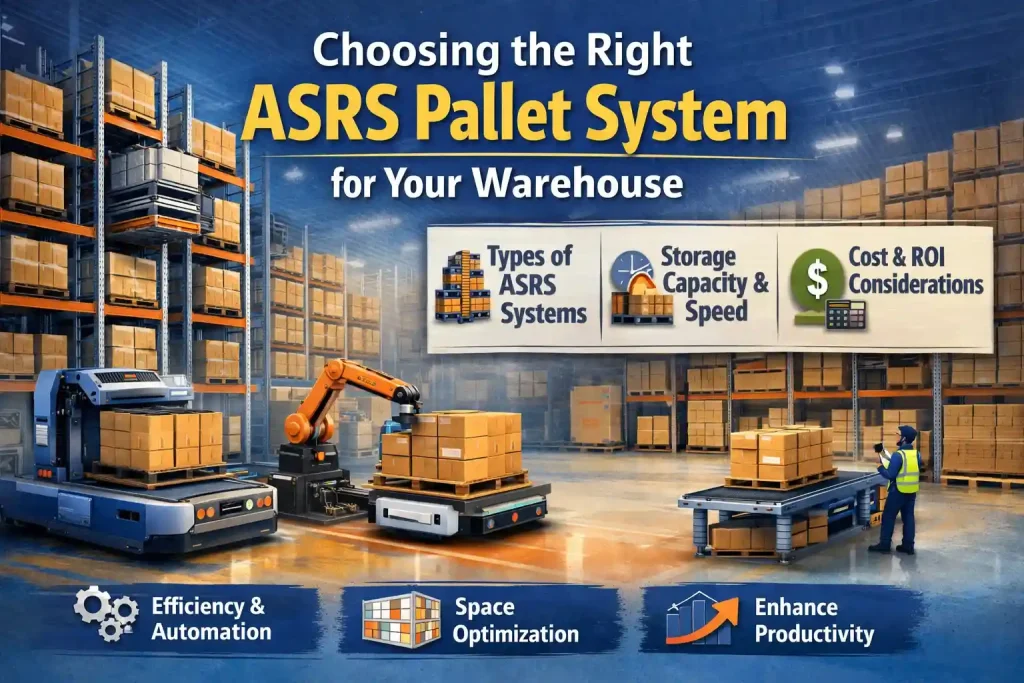









Automated Storage and Retrieval Systems (ASRS) have revolutionized modern warehousing, but successful implementation hinges on one critical component: the right pallet system. When businesses invest in ASRS pallet integration, they’re not just purchasing warehouse equipment—they’re making a strategic decision that impacts operational efficiency for years to come. However, the journey from selection to seamless integration isn’t always straightforward.
Industry data reveals that nearly 60% of warehouse automation projects face unexpected hurdles during the integration phase, with pallet compatibility emerging as a leading concern. Whether you’re managing a sprawling distribution center or optimizing a compact manufacturing facility, understanding these challenges and their solutions can mean the difference between smooth operations and costly downtime. The complexities range from ensuring structural durability under constant mechanical stress to navigating the intricate balance between customization and standardization. Let’s explore the most common obstacles businesses face when integrating ASRS pallets and, more importantly, how to overcome them effectively.
Table of Contents
ToggleQuality and Durability Standards: The Foundation of Reliable Material Handling
The automated nature of ASRS demands pallets that can withstand thousands of cycles without degradation. Unlike manual handling environments, where damaged pallets are quickly spotted and replaced, automated systems operate with minimal human oversight. A failing pallet in an ASRS can jam conveyors, damage inventory, or trigger system-wide shutdowns costing thousands per hour.
The challenge intensifies when businesses source pallets from suppliers with inconsistent manufacturing processes. Variations in material quality, weld integrity, or dimensional tolerances, even slight ones, create compounding problems over time. What performs adequately in manual operations may fail catastrophically under the repetitive precision demands of automated systems.
The Solution: Partner with material handling suppliers who maintain ISO-certified manufacturing facilities and conduct rigorous batch testing. Request documentation on load-bearing capacity, stress testing results, and expected lifecycle under continuous operation. Leading industrial trolley providers typically offer pallets engineered specifically for ASRS environments, with reinforced stress points and precisely controlled tolerances that prevent the micro-variations that cause long-term issues.
Customization Capabilities: Balancing Standardization with Operational Needs
Every warehouse operates differently. Temperature-controlled facilities need pallets resistant to thermal expansion. Food-grade operations require corrosion-resistant materials and easy-clean designs. Heavy manufacturing demands exceptional load capacities. Yet ASRS systems thrive on standardization—every pallet must interact identically with automated mechanisms.
This creates a paradox: businesses need customized solutions that perform with standardized precision. Many suppliers struggle here, offering either rigid off-the-shelf products that don’t quite fit or fully custom solutions that introduce compatibility risks and extended lead times. Companies often discover these limitations only after significant investment in their ASRS infrastructure.
The Solution: Seek suppliers offering modular customization—standardized base platforms with configurable components. This approach allows modifications for specific load types, environmental conditions, or handling requirements while maintaining the dimensional consistency ASRS systems require. Experienced warehouse equipment providers typically maintain engineering teams capable of custom design that still integrates seamlessly with automated systems, often providing CAD models and pre-integration testing to verify compatibility before full deployment.
Cost-Effectiveness Over Time: Understanding Total Ownership Economics
Budget-conscious purchasing decisions often focus exclusively on initial acquisition costs, but ASRS pallet integration demands a longer view. A cheaper pallet that requires replacement every two years costs significantly more than a premium option lasting ten years. Factor in the operational disruption of swapping pallets in an automated system, and the economics shift dramatically.
The hidden costs accumulate quickly: system recalibration when pallet dimensions shift, inventory damage from structural failures, productivity losses during unscheduled maintenance, and the labor required to identify and remove failing units from automation. Many businesses discover these realities only after experiencing multiple costly incidents that could have been prevented with better initial selection.
The Solution: Conduct a total cost of ownership (TCO) analysis before purchasing. Calculate expected lifecycle, replacement frequency, and maintenance requirements across different options. Quality industrial trolleys designed for automated environments typically feature 8-10 year operational lifespans with minimal maintenance, compared to 2-3 years for economy alternatives. Request case studies from potential suppliers showing long-term performance data in similar applications. The initial price premium often pays for itself within the first replacement cycle avoided.
After-Sales Support and Warranty: Protecting Your Automation Investment
ASRS systems represent substantial capital investments, and pallet performance directly impacts system uptime. When issues arise—whether manufacturing defects, unexpected wear patterns, or integration challenges—responsive support becomes critical. Unfortunately, many businesses learn too late that their supplier’s warranty excludes automated applications or that technical support means waiting weeks for responses.
The complexity of automated material handling means problems rarely present with obvious solutions. A pallet that performs perfectly in isolation might exhibit subtle issues only under specific automated handling sequences. Diagnosing these requires suppliers with deep ASRS expertise and commitment to problem-solving partnerships, not just transactional product sales.
The Solution: Prioritize suppliers offering comprehensive warranties specifically covering automated applications, not just general material handling. Look for guarantees on dimensional stability, structural integrity under continuous cycling, and compatibility with major ASRS platforms. Equally important is accessible technical support—suppliers who provide rapid response times, maintain application engineers familiar with your specific automation system, and offer on-site troubleshooting when needed. Establish clear service level agreements before purchase.
Industry Expertise and Compliance: Navigating Regulatory Requirements
Different industries impose distinct requirements on warehouse equipment. Pharmaceutical facilities must meet FDA standards. Food distribution centers need HACCP-compliant pallets. Export operations require ISPM-15 certification. Automotive suppliers face stringent cleanliness protocols. Many businesses implement ASRS systems only to discover their pallets don’t meet industry-specific regulations, forcing expensive retrofits or complete replacement.
The challenge deepens when operating across multiple jurisdictions with varying codes and standards. What satisfies regulations in one region may violate them in another. Generic trolley suppliers rarely maintain the specialized knowledge needed to navigate these complexities, leaving customers to discover compliance gaps through regulatory violations or failed audits.
The Solution: Work with suppliers demonstrating proven expertise in your specific industry sector. Request documentation of relevant certifications, compliance testing, and experience with similar applications. Industry-specialized material handling providers typically maintain relationships with regulatory bodies and understand nuanced requirements. They can guide specifications, ensuring pallets meet both operational needs and regulatory standards from day one, avoiding costly post-installation remediation.
Innovation and Technology Integration: Future-Proofing Your Automation
Warehouse automation evolves rapidly. Today’s cutting-edge ASRS integrates IoT sensors, RFID tracking, and AI-driven optimization. Pallets increasingly serve not just as passive platforms but as data-generating components within smart logistics ecosystems. Businesses investing in automation infrastructure should ensure their pallet systems can adapt to emerging technologies without requiring complete replacement.
The risk lies in partnering with suppliers focused solely on current specifications without considering technological trajectory. Pallets designed purely for mechanical compatibility may lack provisions for sensor integration, tracking capabilities, or the structural modifications future automation upgrades might require. This short-sighted approach creates obsolescence, forcing businesses to choose between limiting system capabilities or undertaking expensive pallet fleet replacements.
The Solution: Select innovative suppliers actively developing next-generation solutions. Look for manufacturers offering sensor-ready designs, embedded tracking capabilities, and modular structures accommodating future modifications. Forward-thinking warehouse equipment providers invest in R&D, collaborate with automation system manufacturers, and design products anticipating industry evolution. Request their technology roadmap and assess their commitment to continuous innovation—indicators they’ll support your operation as automation capabilities advance.
Making the Right Choice for Long-Term Success
Successfully navigating ASRS pallet integration challenges requires more than simply purchasing the cheapest available option. It demands strategic partnerships with suppliers who understand both the technical complexities of automated systems and the operational realities of modern warehousing. The difference between a smooth implementation and a problematic one often comes down to supplier selection.
By prioritizing quality construction, seeking customization within standardized frameworks, analyzing total ownership costs, ensuring comprehensive support, verifying regulatory compliance, and embracing innovation, businesses position their automation investments for sustained success. These aren’t merely nice-to-have features, they’re essential criteria separating reliable operations from perpetual troubleshooting.
Kole Global has built its reputation on understanding these challenges firsthand and delivering solutions that address them comprehensively. With decades of experience in industrial material handling and automated warehouse systems, their commitment to quality, innovation, and customer success makes them an ideal partner for businesses serious about maximizing their ASRS investment. Don’t let pallet integration challenges compromise your automation goals. Choose a supplier who turns potential obstacles into operational advantages.
Ready to optimize your ASRS pallet integration? Contact our team today for a comprehensive assessment of your material handling needs and discover how the right partnership can transform your warehouse automation success.
Frequently Asked Questions:-
1. What makes ASRS pallets different from standard warehouse pallets?
- ASRS pallets require precise dimensional tolerances and superior durability to withstand thousands of automated cycles. Unlike standard pallets used in manual operations, they must maintain exact specifications for consistent interaction with automated mechanisms, feature reinforced construction for continuous use, and often include provisions for tracking technology integration.
2. How long should quality ASRS pallets last in automated systems?
- High-quality ASRS pallets designed specifically for automated environments typically last 8-10 years with minimal maintenance. Economy options may require replacement every 2-3 years. The extended lifespan of premium pallets, combined with reduced downtime and maintenance costs, makes them more cost-effective over time despite higher initial investment.
3. Can ASRS pallets be customized for specific industry requirements?
- Yes, reputable suppliers offer modular customization that maintains standardized dimensions critical for ASRS compatibility. Customizations can include corrosion-resistant materials for food-grade facilities, temperature-resistant designs for cold storage, enhanced load capacities for heavy manufacturing, and industry-specific certifications like FDA compliance or ISPM-15 for export operations.
4. What should I look for in an ASRS pallet supplier’s warranty?
- Look for warranties specifically covering automated applications, not just general material handling. Key coverage should include dimensional stability under continuous cycling, structural integrity guarantees, and compatibility assurances with major ASRS platforms. Ensure the warranty includes responsive technical support with defined service level agreements and provisions for on-site troubleshooting if needed.
5. How do I calculate the total cost of ownership for ASRS pallets?
- Calculate TCO by considering initial purchase price, expected operational lifespan, replacement frequency, maintenance requirements, and potential downtime costs. Include indirect costs like system recalibration when pallets wear, inventory damage from failures, and labor for identifying problematic units. Quality pallets with 8-10 year lifespans often prove more economical than cheaper alternatives requiring replacement every 2-3 years.